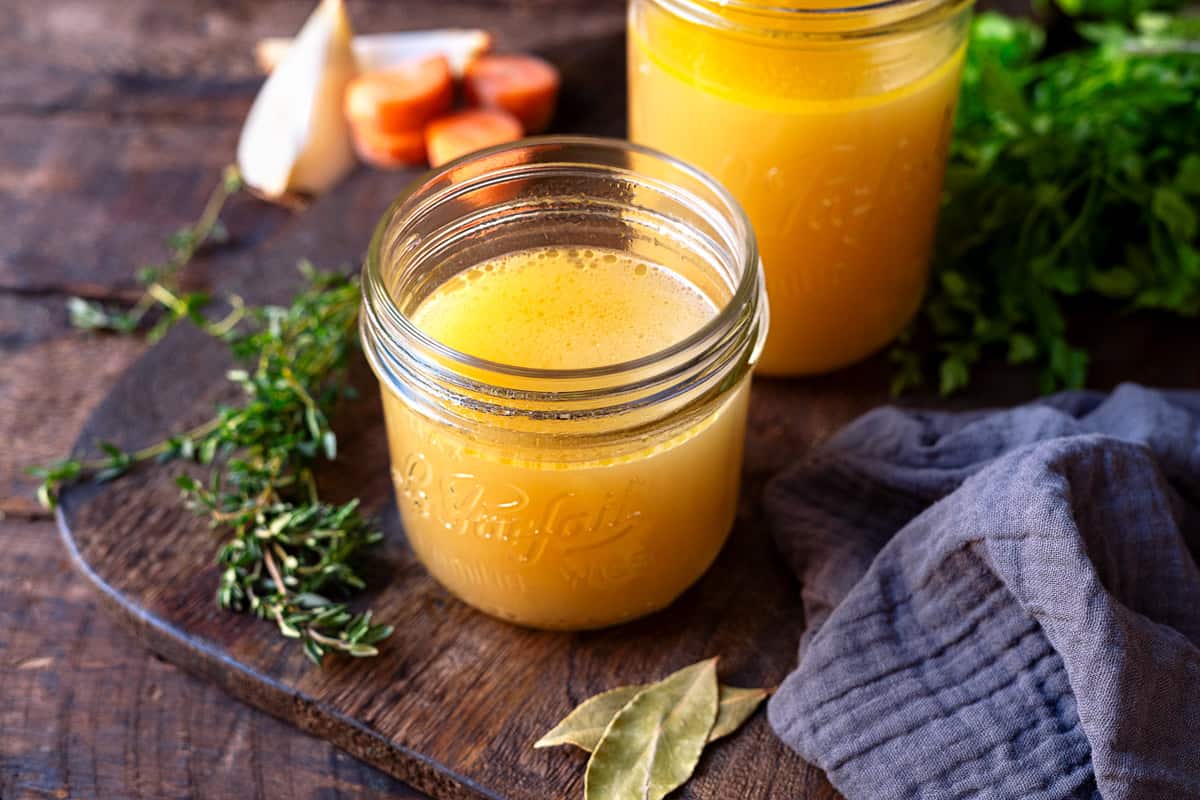
Unlock Culinary Depth with Easy Homemade Chicken Stock
There's a secret ingredient that elevates everyday cooking from good to gourmet, transforming a simple dish into an unforgettable experience: homemade chicken stock. Forget those bland, store-bought cartons – crafting your own liquid gold is not only surprisingly easy but also incredibly rewarding. This comprehensive guide will walk you through creating a rich, flavorful homemade chicken stock recipe using either your stovetop or a slow cooker, ensuring you have a foundation for countless delicious meals.
From fortifying hearty soups and stews to enriching pan sauces and gravies, a quality chicken stock is the backbone of so much incredible cuisine. Best of all, it's a wonderfully resourceful way to utilize leftover chicken bones and vegetable scraps, turning potential waste into culinary treasure. Get ready to infuse your cooking with unparalleled flavor and nourishment.
Why Homemade Chicken Stock is a Kitchen Essential
The difference between store-bought broth and a lovingly prepared homemade stock is like night and day. While commercial varieties often rely on artificial flavors and excessive sodium, a homemade version offers a depth of flavor that is truly incomparable. It's the secret weapon of chefs and home cooks alike, providing a rich, savory foundation that enhances everything it touches.
- Superior Flavor: Made with real bones and fresh vegetables, homemade stock develops a complex, savory taste that store-bought versions simply can't replicate. It adds body and richness that transform your dishes.
- Health Benefits: Rich in collagen, gelatin, and essential minerals extracted from the bones, chicken stock is a nutritional powerhouse. It can support joint health, gut health, and boost immunity.
- Cost-Effective: Instead of discarding chicken carcasses or vegetable trimmings, you can transform them into a valuable ingredient, saving money on store-bought alternatives. This makes a homemade chicken stock recipe an excellent way to minimize food waste and maximize your grocery budget.
- Customizable: You control every ingredient, from the salt content to the specific herbs and spices. This allows you to tailor your stock to your exact preferences and dietary needs.
- Versatile: Beyond soups, stock is essential for risottos, braising meats, making gravies, creating delicious sauces, and cooking grains like rice and quinoa.
The Building Blocks: Essential Ingredients for Your Homemade Chicken Stock Recipe
While the beauty of homemade stock lies in its flexibility, a few core ingredients form the foundation for a truly exceptional batch. Think of these as your essential starting point, from which you can experiment and personalize.
Essential Ingredients:
- Chicken Bones: This is the soul of your stock. You'll need about 1 pound of bone-in chicken parts. Good options include:
- A whole chicken carcass: Perfect after roasting a chicken.
- Rotisserie chicken bones: An incredibly convenient way to get rich bones.
- Chicken wings, backs, or necks: These parts are rich in collagen, contributing to a gelatinous, full-bodied stock.
- Chicken feet: For an extra-gelatinous stock, often prized in Asian cuisine.
Pro Tip: For an even deeper, richer flavor, consider roasting your chicken bones and vegetables until lightly browned before adding them to the pot. This caramelization adds incredible depth.
- Aromatics (Mirepoix): The classic trio of onion, celery, and carrots provides a balanced and sweet base flavor.
- 1 large onion: Quartered. No need to peel if clean, as the skin adds color.
- 3 stalks celery ribs with leaves: Cut into 1-inch pieces. The leaves hold extra flavor!
- 1 large carrot: Cut into 1-inch chunks.
- Water: Approximately 6 cups, or enough to generously cover all ingredients.
- Salt: 1 ½ teaspoons, or to taste. Remember, you can always add more salt to the finished dish, but you can't take it out.
Optional Flavor Enhancers:
This is where you can truly make your homemade chicken stock recipe your own. Don't be afraid to experiment!
- Garlic: 2-3 cloves, smashed (peeling optional).
- Herbs: A bay leaf is a classic addition. Sprigs of fresh parsley, thyme, or rosemary can also add aromatic notes.
- Spices: Whole black peppercorns (about 1 teaspoon), 3 whole cloves (as suggested in the reference, these add a warm, subtle spice), or even a pinch of chili powder for a slight kick.
- Acid: A splash of apple cider vinegar (1-2 tablespoons) can help extract more minerals from the bones.
- Ginger or Fennel: For unique flavor profiles. Roasted garlic or ginger can add sweetness and warmth.
Remember, many of these ingredients can be saved as scraps from other cooking projects. Keep a freezer bag dedicated to vegetable trimmings (onion ends, carrot peels, celery butts) and chicken bones to always be ready for your next batch of stock!
Mastering the Methods: Stovetop & Slow Cooker Homemade Chicken Stock
Whether you prefer a quick simmer or a hands-off approach, making homemade chicken stock is adaptable to your kitchen workflow. Both methods yield delicious results; choose the one that best suits your schedule.
Stovetop Method (Quick & Classic)
The stovetop method is excellent for when you want stock relatively quickly, typically within 1-2 hours of simmering.
- Gather & Combine: Place your chicken bones/parts, onion, celery, carrot, salt, and any optional herbs or spices (like cloves, bay leaf, peppercorns) into a large soup pot or Dutch oven.
- Add Water: Pour in 6 cups of cold water, or enough to cover all ingredients by at least an inch. Starting with cold water helps to slowly extract impurities and create a clearer stock.
- Bring to a Boil: Place the pot over high heat and bring the water to a rolling boil.
- Simmer & Cover: Once boiling, immediately reduce the heat to low. The goal is a gentle simmer, just enough to see small bubbles breaking the surface. Cover the pot with a lid, leaving it slightly ajar to prevent boil-over. Simmer for at least 1 hour, or up to 2-3 hours for a richer flavor.
- Cool & Strain: Remove the pot from heat and allow it to cool slightly. Carefully remove the large chicken parts and vegetables with a slotted spoon or tongs. Strain the stock through a fine-mesh sieve into a clean bowl or container. For an even clearer stock, line the sieve with cheesecloth.
Slow Cooker Method (Hands-Off & Flavorful)
The slow cooker is perfect for a truly hands-off approach, allowing the ingredients to gently meld over several hours, resulting in a deeply flavored stock with minimal effort.
- Load the Cooker: Place chicken bones/parts, onion, celery, carrot, salt, and any optional herbs or spices into your slow cooker insert.
- Add Water: Pour in enough cold water to cover all ingredients. Be mindful of your slow cooker's maximum fill line.
- Set & Forget: Cover and cook on the LOW setting for 6-8 hours, or on HIGH for 3-4 hours. The longer, slower cooking time on LOW tends to extract more flavor and gelatin.
- Cool & Strain: Once cooked, turn off the slow cooker and let the stock cool slightly. As with the stovetop method, remove the large solids and strain the stock through a fine-mesh sieve (lined with cheesecloth if desired) into a clean container.
Regardless of the method, once strained, your stock is ready for the next steps.
Finishing Touches: Straining, Skimming & Clarifying Your Stock
Once your stock has simmered to perfection, a few final steps ensure it’s ready for prime time.
- Initial Strain: As mentioned above, always begin by straining your stock through a fine-mesh sieve to remove all solids – bones, vegetables, and herbs. For a clearer stock, line your sieve with several layers of cheesecloth.
- Skim the Fat: As the stock cools, fat will rise to the surface. For healthier stock and better flavor integration in dishes, it's generally best to remove most of this.
- Immediate Skimming: Use a large spoon or a fat separator to skim off the fat while the stock is still warm.
- Refrigeration Method: For easiest fat removal, refrigerate the stock overnight. The fat will solidify into a solid layer on top, which can then be easily lifted off and discarded (or saved for cooking if desired).
- Clarifying Your Stock (Optional, for Crystal-Clear Results): If you're aiming for a perfectly clear consommé or French onion soup, you might want to clarify your stock further. This process removes tiny solid flecks that even cheesecloth can miss.
- Prepare the Clarifier: In a small bowl, combine ¼ cup cold water, 1 large egg white, and the crushed shell of that egg. The egg white acts as a coagulant, attracting impurities as it cooks.
- Combine & Heat: Add this egg white mixture to your strained, defatted stock. Bring the stock gently to a boil, whisking occasionally. As it heats, the egg white will form a raft on top, trapping impurities.
- Rest & Re-strain: Once boiling, remove from heat and let it stand undisturbed for 5 minutes. The raft will settle.
- Final Strain: Carefully strain the stock again, this time through a sieve lined with a fresh piece of cheesecloth (or even a coffee filter for ultimate clarity), being careful not to disturb the egg raft too much. You'll be left with a beautifully clear, amber-colored stock.
Tips for Storing and Using Your Liquid Gold
Having a batch of homemade chicken stock on hand is a game-changer. Here’s how to store it and get the most out of it:
- Refrigeration: Cooled stock can be stored in airtight containers in the refrigerator for up to 4-5 days.
- Freezing: For longer storage, freeze your stock.
- Portioning: Freeze in 1-cup or 2-cup portions using freezer-safe containers, zip-top bags (laid flat), or even ice cube trays for small amounts.
- Longevity: Frozen stock can last for 6 months to a year without significant loss of quality.
- Labeling: Always label your containers with the date to keep track.
- Creative Uses:
- Base for soups, stews, chili, and The Best Homemade Chicken Stock Recipe for Rich Flavor will make your French onion soup unforgettable.
- Use in place of water when cooking rice, quinoa, or couscous for added flavor.
- Deglaze pans for rich sauces and gravies.
- Braise meats like short ribs or chicken thighs.
- Enrich mashed potatoes or polenta.
- Use as a comforting hot beverage on a cold day.
Conclusion
Making your own homemade chicken stock recipe is one of the most fundamental and rewarding skills a home cook can master. It's a simple process that yields incredible flavor, reduces waste, and nourishes both body and soul. Whether you opt for the stovetop or slow cooker method, the effort is minimal compared to the culinary impact it will have on your dishes. So, next time you have leftover chicken bones or vegetable scraps, don't throw them away. Turn them into liquid gold and elevate your everyday cooking to extraordinary new heights!
